
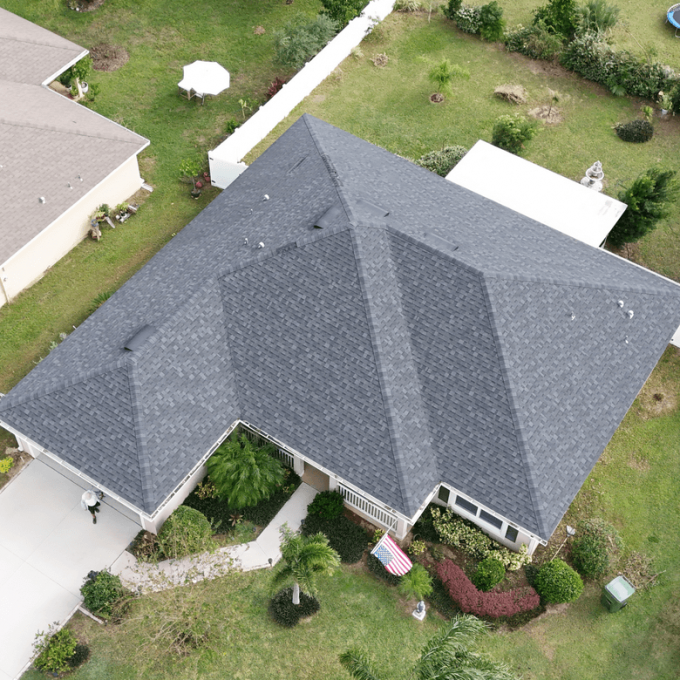
1. Start with a Professional Florida Roof Inspection
Booking in April or May, before contractor schedules fill up, gives you enough lead time to complete any repairs before the June 1 season start.
A Florida roof inspection before hurricane season is the single most valuable step a homeowner can take. Trained inspectors identify problems that are invisible from the ground and easy to miss during a casual walkthrough: hairline cracks in flashing, subtly lifted shingle edges, failing underlayment, and deteriorating sealants around penetrations. These are all inexpensive to fix before a storm and expensive to ignore after one.
- – Book before the season peaks. Inspection schedules fill weeks in advance. Early booking also means faster repair turnaround if issues are found.
- – Get a written report. A documented pre-season baseline is critical for insurance claims. Without it, proving pre-existing conditions versus storm damage becomes difficult.
- – Use only Florida-licensed contractors. Licensing ensures work meets Florida Building Code standards. Unlicensed repairs can void your homeowner’s policy.
- – Revisit any prior repairs. Previous patches and spot fixes are the most common failure points in a storm. Flag them for extra scrutiny during the inspection.
If your roof is 15 years or older and has not had a formal Florida roof inspection in the past 12 months, this step is urgent. Older roofing systems face significantly higher failure risk even at wind speeds below hurricane threshold.
2. Address Loose Shingles and Flashing Before Winds Arrive
Loose shingles and compromised flashing are the leading causes of wind-driven water intrusion during a hurricane. A single lifted shingle edge can allow water to work under the surface, saturate the decking, and cause interior damage costing tens of thousands, even from a storm that does not make direct landfall. Hurricane-ready roofing means closing every one of these vulnerabilities before the season opens.
- Replace cracked or curling shingles. Brittle or granule-depleted shingles will not hold under sustained wind. Any shingle showing visible wear should be replaced before the season.
- Secure or replace missing tiles. A single missing tile creates an opening for water and wind uplift. Match materials carefully to maintain full weatherproofing.
- Re-seal all roof flashing. Flashing around chimneys, skylights, vents, and valleys is the most vulnerable point on most roofs. Gaps or lifted edges can admit gallons of water per hour during a storm.
Re-seal all roof flashing. Flashing at chimneys, skylights, vents, and valleys is the most common water intrusion point during a storm. Gaps as small as a few millimeters can allow gallons of water per hour to work under the surface at hurricane-force wind speeds. A licensed roofer can reseal and refasten all flashing points in a single visit, well before the season requires it. - Inspect ridge caps thoroughly. Ridge caps absorb the greatest wind uplift of any roof component. Every fastener should be fully set and all sealant intact.
A roof fastened to current Florida Building Code standards can handle winds up to 130 mph. A roof with even minor unaddressed damage from loose shingles or deteriorated flashing can fail well below that threshold.
3. Clear Gutters and Check Roof Drainage
When gutters are blocked during heavy rainfall, water backs up under the roofline rather than draining away from the structure. This is called ponding, and it accelerates leaks, causes fascia rot, and can compromise the roof deck within hours. Clearing gutters before hurricane season is one of the fastest, lowest-cost steps a homeowner can take.
Gutter and drainage maintenance is one of the most overlooked parts of hurricane roof preparation. Clogged gutters during a hurricane force water to back up under the roofline, a condition known as ponding, which accelerates leaks, causes fascia rot, and can compromise the roof deck. Keeping water moving away from your home is a straightforward, high-impact step.
- – Clear all debris from gutters. Leaves, seed pods, and storm debris should be fully removed. Even partial blockages can cause backup under sustained rainfall.
- – Test every downspout. Run water from the top of each gutter run to confirm free drainage through every downspout. Blockages inside the downspout are easy to miss.
- – Resecure loose gutter sections. Water-weighted gutters can pull away from the fascia during a storm. Refasten any loose brackets and check all end caps and joints.
- – Direct discharge away from the foundation. Downspout extensions should redirect water at least 6 feet from the foundation to prevent flooding and soil erosion during heavy rainfall.
4. Trim Trees Around Your Roof
Falling and wind-driven branches are among the most common causes of roof punctures and structural damage during Florida hurricanes. Pre-season tree trimming is straightforward storm roof protection that most homeowners can coordinate well in advance, and it is significantly less costly than emergency removal after a storm.
- – Remove branches within 10 feet of the roofline. At hurricane-force wind speeds, even a healthy branch can become a projectile capable of punching through multiple layers of roofing material.
- – Assess dead or compromised trees. Any tree showing signs of disease, root damage, or structural weakness near your home should be evaluated by a certified arborist before the season.
- – Secure or remove loose yard items. Patio furniture, potted plants, grills, and unsecured decorative items become airborne projectiles in sustained winds. Store them inside or anchor them before a storm.
Check with neighboring properties. Overhanging branches from adjacent lots are a shared risk. Address them early to avoid disputes and uninsured damage.
5. Build Your Hurricane Emergency Preparation Plan
Storm roof protection does not stop at the physical condition of your roof. Having a clear emergency plan means you can act quickly and calmly when a storm watch or warning is issued, rather than scrambling for supplies or trying to reach contractors at the last minute.
- – Know your evacuation zone. Florida counties publish evacuation zones online. Know yours before the season and have a plan for where you will go if a mandatory evacuation is ordered.
- – Document your roof before the season. Take timestamped photos and video of your entire roof exterior and attic space. This pre-loss documentation is essential for any insurance claim after a storm.
- – Have your contractor’s number ready. Keep Noland’s Roofing contact information saved and accessible. Post-storm roofing response is fastest for existing customers and inspection clients.
- – Prepare a storm action checklist. Board or shutter windows, shut off utilities before evacuating, and do a final exterior walkthrough to secure loose items. Doing this in advance means nothing gets missed under pressure.
- – Act quickly after a storm. Photograph all damage inside and out as soon as it is safe. Contact your roofer and insurer promptly. Delays allow moisture damage to compound and can complicate claims.
The homeowners who come out of hurricane season with the least damage are the ones who treated preparation as a scheduled task, not a reaction to a forecast. Inspections, repairs, documentation, and a clear action plan can all be completed before June. Once a named storm forms, none of those steps are available to you.
The Bottom Line
Hurricane roof preparation, a thorough Florida roof inspection, attention to loose shingles and flashing, clear gutters and drainage, trimmed trees, and a solid emergency plan are the five pillars of a hurricane-ready roofing strategy. None of these steps require a storm on the radar to justify them. All of them become significantly harder and more expensive once the season is underway.
Noland’s Roofing has helped Central Florida homeowners protect their roofs through hurricane season for years. We know where roofs fail, what to look for, and how to fix it before the storms arrive.
Schedule a Hurricane Season Roof Inspection
Contact Noland’s Roofing to schedule your professional roof assessment. Our licensed Central Florida team inspects every component of your roof, identifies vulnerabilities before a storm can exploit them, and provides a written condition report you can keep on file for insurance and planning purposes—with no obligation and no pressure.
☎ Call or visit: nolandsroofing.com