Guides
New Construction Roof Installation in Florida: Inspections, Code and Paperwork
2026-11-05 · Noland's Roofing
A new-construction roof in Florida goes on in a fixed order: the roof is framed and sheathed, the deck is dried in with code-approved underlayment, the shingle, tile or metal system is installed, and the building department inspects the work along the way. The brand of shingle is rarely what causes trouble. The sequence, the inspections and the paperwork are.
This guide walks through that sequence under the 2023 Florida Building Code (8th Edition), what each inspection looks at, and what to keep when the roof is done. It is written for custom-home owners and builders in Central Florida. If you are replacing an existing roof, our roof replacement overview is the better starting point.
When does the roof go on during a new build?
Roofing follows framing and sheathing. The code's inspection list includes a sheathing inspection of the roof and wall sheathing and their fasteners. Dry-in comes next: underlayment goes down so the structure is weather-tight and interior trades can keep working. The shingle, tile or metal covering follows.
The building official, not the roofer, sets the timing and sequence of inspections for your jurisdiction (Florida Building Code, Building, Section 110.3). That is why two homes in different cities or counties can run the same steps in a slightly different order.
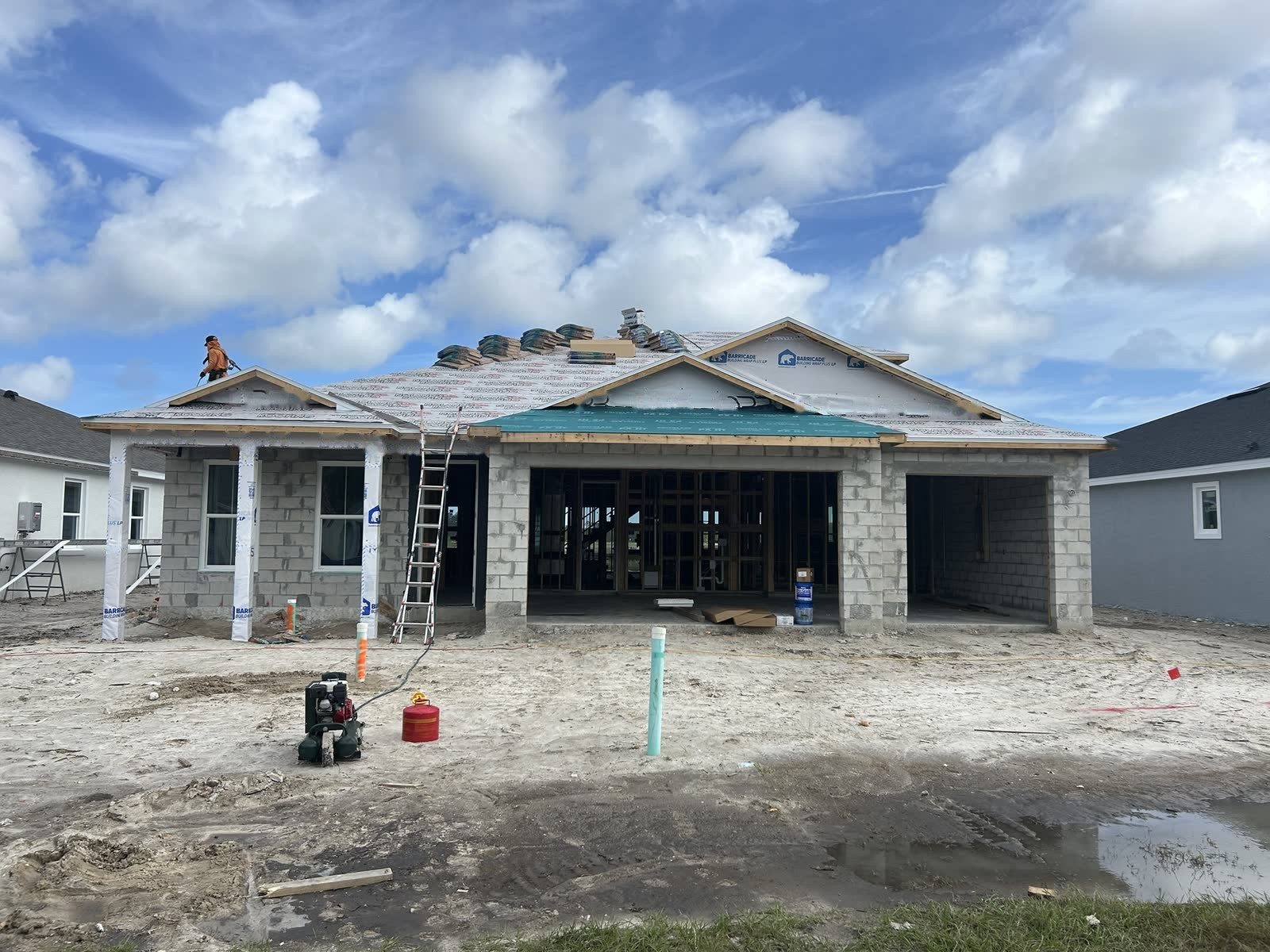
One of our new-construction jobs at the dry-in stage: the deck is covered in underlayment and the shingle bundles are staged on the ridge.
What inspections does a new roof go through?
Section 110.3 lists the required inspections and the minimum items each one covers. The three that matter for the roof are:
| Inspection | What the code lists at a minimum |
|---|---|
| Sheathing | Roof sheathing, wall sheathing, sheathing fasteners, and the roof and wall dry-in. Made as part of a dry-in inspection, or separately once all sheathing and fasteners are complete. |
| Roofing | Dry-in, insulation, roof coverings and flashing. |
| Final | Made after the building is completed and ready for occupancy. |
The sheathing inspection looks at the deck and its fasteners, which the underlayment then covers, so ask how it is being scheduled on your job. When an inspection finds violations, the building official notifies the permit holder or their agent of what has to be corrected, and the work moves on once that portion is released.
Who requests each inspection, and who handles corrections, belongs in the written roofing scope. Our new construction roofing page lists what to put in front of a roofer before pricing.
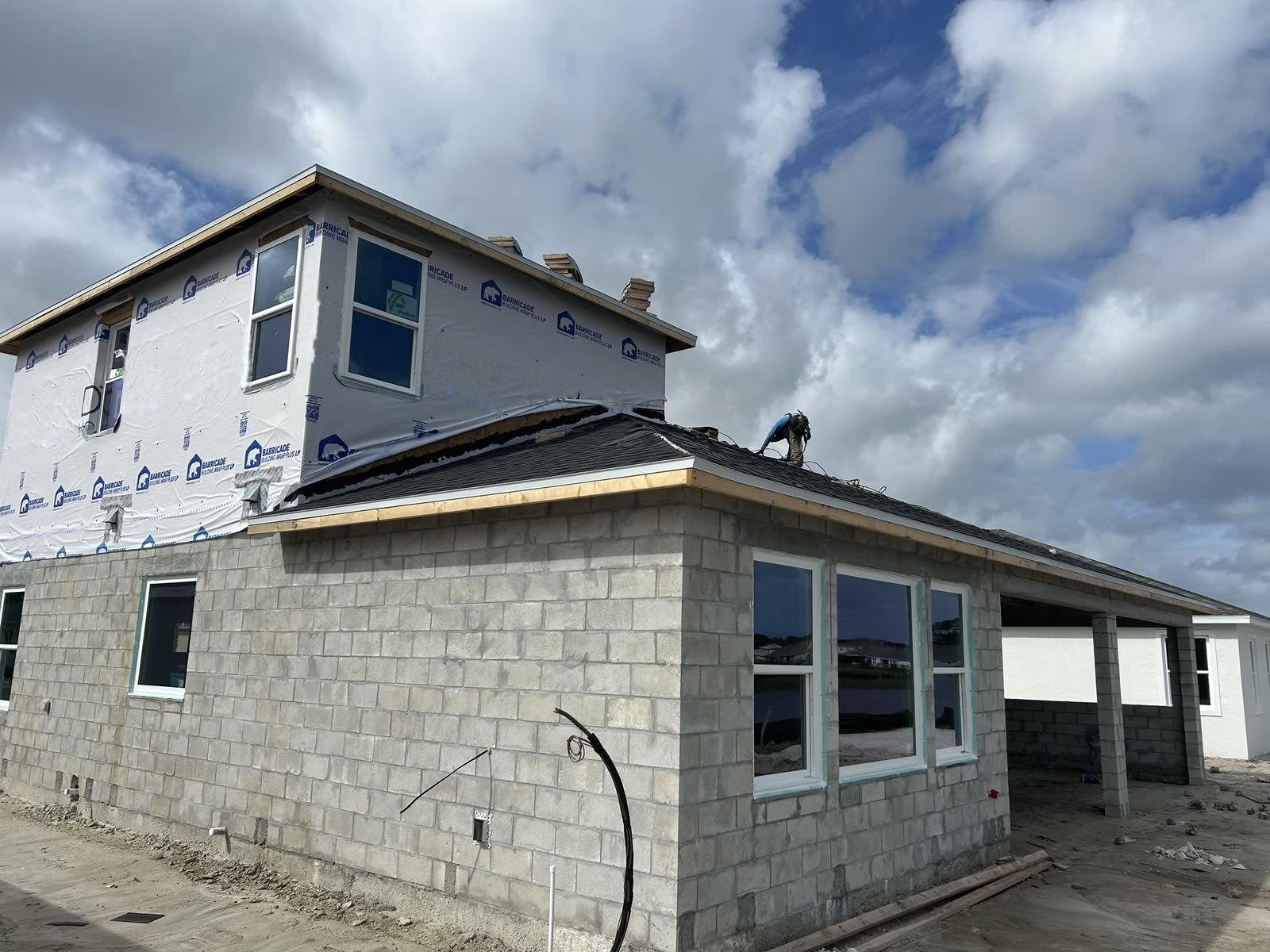
A roof-to-wall transition like this one is the kind of flashing detail the roofing inspection covers.
What does Florida require for dry-in underlayment?
Dry-in means the roof deck is covered so the house is weather-tight. In Florida that covering is more than a layer of felt. Outside the High-Velocity Hurricane Zone (Miami-Dade and Broward), the residential code requires a sealed roof deck under asphalt shingles and metal panels, and it allows three ways to build one:
- A self-adhering polymer-modified bitumen underlayment (ASTM D1970) over the entire roof deck.
- Self-adhering membrane strips or flashing tape over every joint in the deck, with an approved underlayment over the whole roof.
- Two layers of approved felt or synthetic underlayment, lapped and fastened as specified.
Tile is handled differently. It follows the FRSA/TRI Florida High Wind installation manual for concrete and clay tile. These options come from Section R905.1.1 of the Florida Building Code, Residential. The Florida Building Commission's roofing fact sheet describes them as the sealed-deck rules that first became standard in the 7th Edition (2020) code.
Ask which of the three your roofer's proposal uses. It should be named in the scope, along with the underlayment product.
How do you choose between shingle, tile and metal on a new build?
On a new build the covering is a design decision, not a swap. Tile is much heavier than shingle, so settle on it before the trusses are engineered, and ask your builder or engineer what the roof structure was designed for. Our comparisons cover the trade-offs: metal vs. shingles, tile vs. shingle and architectural vs. 3-tab shingles.
Two code points apply whichever you pick:
- Florida product approval. Roofing is one of the product categories that needs statewide approval under Section 553.842, Florida Statutes, and the product has to be used consistent with the conditions of its approval. A local jurisdiction cannot ask for extra testing of an approved product used that way. Ask for the approval numbers for the underlayment and the covering and keep them with the permit file.
- Shingle wind rating. For asphalt shingles, Section R905.2.6.1 requires the shingle to be tested and classified under ASTM D3161, TAS 107 or ASTM D7158 and to meet the class in Table R905.2.6.1 for the design wind speed. The wrapper has to be labeled with that classification. Ask your builder for the design wind speed on your plans and read the label on the bundles.
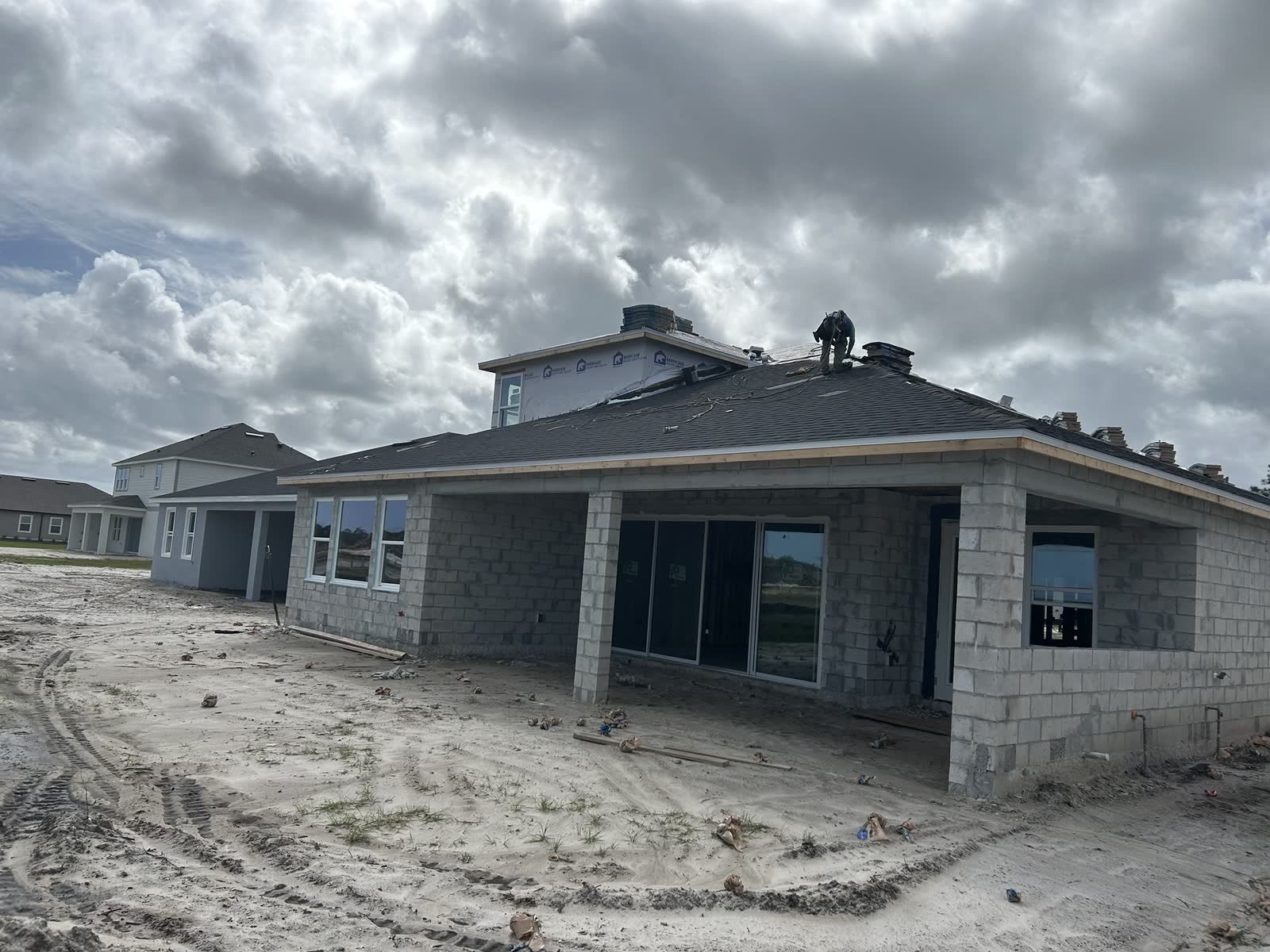
Shingles going on at the rear of a new build, with the covered patio below.
Is a new Florida Building Code coming?
Yes. The 9th Edition (2026) Florida Building Code is scheduled to take effect on December 31, 2026. Miami-Dade County's building department has announced that permit applications submitted on or after that date must follow the new edition, and building departments generally apply the code edition in effect when the permit application is filed.
This guide describes the 2023 (8th Edition) code, which applies until then. It does not cover what changes in the 9th Edition. If your permit application will land near the year-end cutoff, ask your builder and your building department which edition applies.
What should you keep when the roof is done?
- The final roof inspection sign-off and the permit record.
- Product approval numbers and manufacturer documents for the underlayment and the covering, including the warranty. Warranty terms and service life are different things, so read the terms.
- Dated photos from the dry-in stage. Once the covering is on, the underlayment cannot be seen.
- A wind mitigation inspection report. The state's Uniform Mitigation Verification Inspection Form (OIR-B1-1802) must be the Rev. 04/26 version for inspections on or after April 1, 2026. A completed form is valid for up to five years if the structure has not materially changed, and admitted insurers in Florida must accept a valid form completed by a qualified inspector. The discount depends on your insurer, the home and which features verify, so we do not promise a figure. Our hurricane prep guide explains the inspection.
What should you ask before the roof goes on?
- Who hired the roofer, the builder or you, and who is responsible for permits, inspection requests and corrections?
- Which underlayment method is being used, and what are the product approval numbers?
- Which covering is specified, and what design wind speed and shingle class are on the plans?
- When will the sheathing and roofing inspections happen, and who calls them in?
- What happens if an inspection fails?
- Who delivers the final paperwork, including the sign-off, approvals, warranty and dated photos?
What is the next step?
Building in Central Florida? We work directly with builders and site supervisors from our Clermont and Orange City offices, and we price from your plans. Send them through our new construction roofing page and we will come back with a plans-based price.
This guide is general information. Your plans, your building department and the code edition that applies to your permit control the requirements for your home.
Quick answers
When is the roof installed on a new construction home in Florida?
After framing and roof sheathing. The roof is dried in first so interior trades can keep working, then the shingle, tile or metal covering goes on, with inspections along the way. The building official sets the exact timing and sequence of inspections in your jurisdiction, so the order can differ slightly between cities and counties.
What is a dry-in inspection in Florida?
Dry-in means the roof deck is covered with underlayment so the structure is weather-tight. The Florida Building Code lists a sheathing inspection, covering roof and wall sheathing, sheathing fasteners and the dry-in, that can be made as part of a dry-in inspection or separately. The roofing inspection that follows covers, at a minimum, the dry-in, insulation, roof coverings and flashing.
What underlayment does a new roof need in Florida?
Outside Miami-Dade and Broward, asphalt shingle and metal panel roofs need a sealed roof deck built one of three ways: a self-adhering membrane over the whole deck, membrane strips or flashing tape over every deck joint plus an approved underlayment over the whole roof, or two layers of approved underlayment. Tile follows the FRSA/TRI Florida High Wind installation manual. The proposal should say which method is being used.
Does a new Florida roof need a product approval?
Yes. Roofing is one of the product categories that needs statewide approval under Section 553.842, Florida Statutes, and the product has to be used consistent with the conditions of its approval. Ask for the Florida product approval numbers for the underlayment and the covering and keep them with your permit file.
Should I get a wind mitigation inspection on a new roof?
It is worth asking your insurer. A wind mitigation inspection records the roof's wind-resistant features on the state's uniform form, OIR-B1-1802 (Rev. 04/26 for inspections on or after April 1, 2026), and a completed form is valid for up to five years if nothing material changes. Any discount depends on your insurer, the home and which features verify, so no figure is guaranteed.
Building a home in Central Florida?
Send your plans and your builder's contact. We price new-construction roofs from the plans, not from an online replacement estimate.
Request a plans-based priceCall Clermont: (352) 242-4322Want Noland’s answers first?
Add us as a preferred source and Google will highlight our roofing guides for you in Search and AI results.