Guides
Hurricane Season Ends November 30: Your Fall Roof Checklist for Central Florida
2026-10-26 · Updated 2026-10-26 · Noland's Roofing
The mornings are finally a little cooler, the afternoon storms have eased up, and Thanksgiving is right around the corner. Hurricane season officially ends on November 30, and for most of us in Clermont and the rest of Central Florida, that's a good time to breathe out.
It's also the best time all year to take a quick look at your roof. The summer weather is behind you, the drier months are here, and anything small you spot now can be handled well before next June.
We're Noland's Roofing, a family-owned company with offices in Clermont and Orange City (License #CCC1335461). Every fall, neighbors tell us, "I don't think the storms did anything to my roof." Usually they're right. This checklist helps you know for sure, in about 20 minutes, without ever leaving the ground.
Why fall is a good time to look
A season of summer storms is hard on a roof, even when no hurricane comes through town. Most wear is small: a shingle that lifted in a gust, sealant that cracked in the heat, a gutter that pulled loose in a downpour.
Small things are easy to fix. Left alone through another rainy season, they can let water reach the wood under your shingles, and that's when a simple repair gets bigger.
Fall makes it easy:
- Drier weather. Fewer rain delays if anything needs work.
- Easier scheduling. Booking a roofer in November is a lot simpler than the week after a storm.
- A fresh start. Your roof heads into next season in good shape.
Your 20-minute walk-around
Grab your phone, pick a clear afternoon and walk around the house. Zoom in with your camera instead of climbing anything.
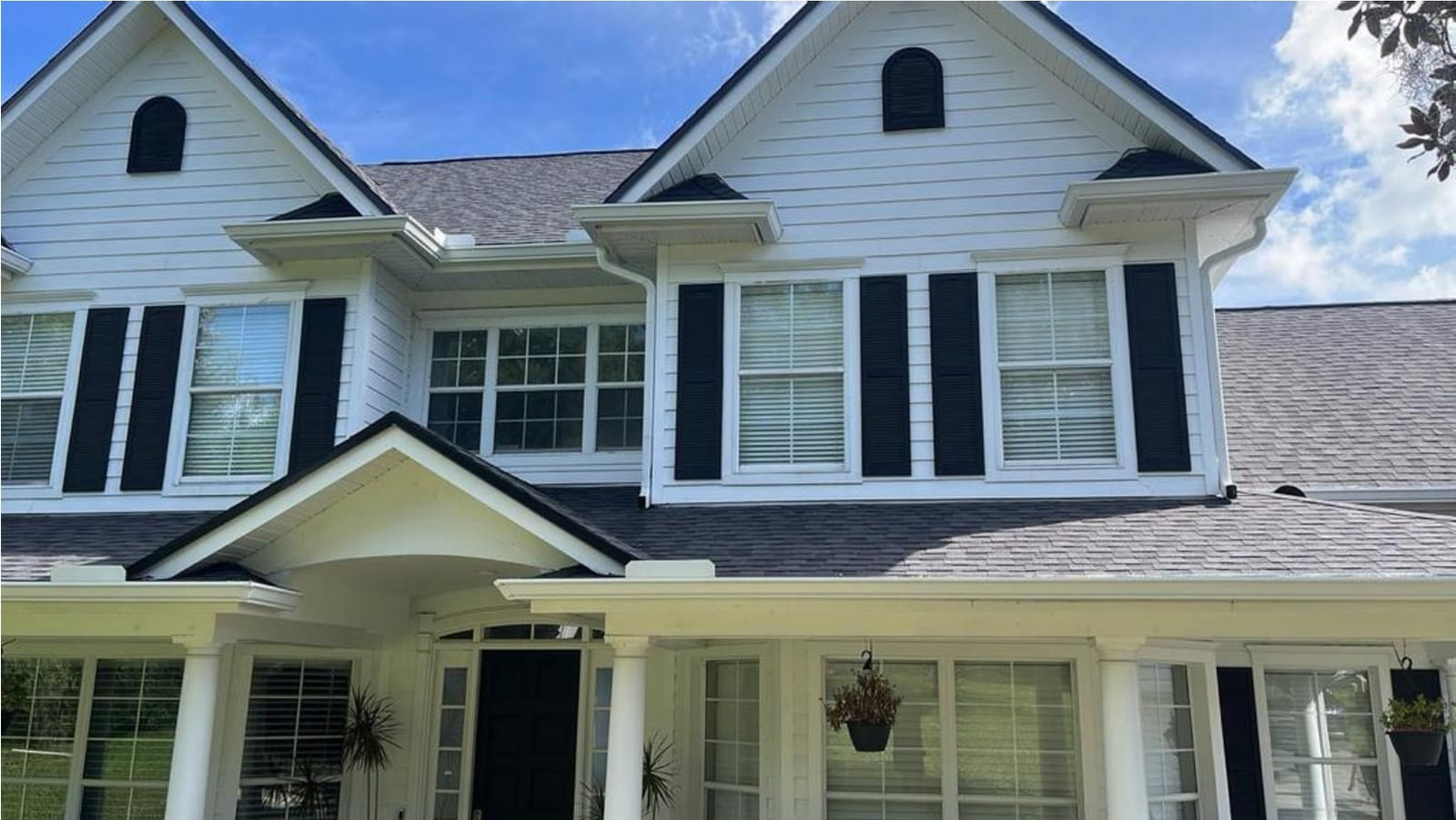
- Shingles. Look for any that are missing, curled or lifted, especially along edges, corners and the peak.
- Tile roofs. Look for cracked or slipped tiles, or broken pieces in the yard.
- Granules. A little pile of sandy grit at the bottom of a downspout means shingles are wearing down.
- Metal around vents and chimneys. It should sit flat, with no gaps or rust.
- The roof line. From across the street, the peak should look straight, not wavy or sagging.
Snap a photo of each side of the roof while you're out there. Next fall, you'll have something to compare against.
If a specific storm hit your street this year, our guide on what to look for after a storm goes deeper, and if you evacuated for Isaias, start with our post-evacuation roof walk-through.
Gutters, soffit and siding
Your roof sends water to the gutters and trim, so they're worth a quick look too.
- Gutters. Are they clear of leaves? Sitting level? Is water draining away from the house?
- Soffit and fascia. That's the trim under the roof edge. Look for peeling paint, soft spots, stains or gaps. Our guide to soffit, fascia and gutter leaks explains what those signs mean.
- Siding. Look for loose, cracked or warped pieces, especially on the side that takes the most weather.
A quick look inside
- Ceilings. Any new brown rings or stains, especially in closets and upstairs rooms?
- The attic. If you can get in safely, look for spots of daylight, damp insulation or dark stains on the wood above.
- Smell. A musty smell in the attic or an upstairs closet can be the first sign of a slow leak.
Please stay off the roof
Shingles can be slick even when they're dry, tile can crack under your feet, and falls happen fast. Everything on this list can be done from the ground or from inside. If something looks off, take a picture and let a roofer handle the climbing.
When to give a roofer a call
It's worth having a pro take a look if you notice:
- Missing or lifted shingles, or cracked tile
- New stains on a ceiling or in the attic
- Granule piles at your downspouts
- Soft or damaged soffit and fascia
- A roof that's 15 years or older and hasn't been looked at in a while
Most of what turns up after storm season is a simple repair, not a new roof. Our guide to repairing or replacing a roof in Florida walks through how to tell the difference, and our roof replacement page explains what's involved when the time does come.
Want a second set of eyes?
If you'd rather have someone else do the looking, we're happy to help. Our Home & Roof Report Card covers your roof, gutters, soffit, fascia and siding in one visit, on a day and time that work for you. You get a simple graded summary with photos showing what's in good shape, what to keep an eye on, and anything that needs attention.
With the holidays coming up, it's one less thing on your list. Schedule your Home & Roof Report Card, or give our Clermont or Orange City office a call.
Quick answers
When does hurricane season end in Florida?
The Atlantic hurricane season runs from June 1 through November 30. Storms can form outside those dates, but late fall is the natural point to look back at what your roof went through this year and fix small problems before next June.
What should I look at on my roof after hurricane season?
From the ground, look for missing, lifted or creased shingles, cracked or slipped tile, bent flashing, and granules collecting at downspouts. Check gutters for clogs and sagging, soffit and fascia for gaps or soft spots, and ceilings and the attic for stains or damp insulation. Stay off the roof itself.
Is fall a good time for roof work in Central Florida?
Yes. Fall and winter bring Central Florida's drier months, so there are fewer rain delays, and crews are easier to schedule than in the weeks right after a named storm. It's also far better to fix a small leak in November than to find it during next summer's first downpour.
What is the Home & Roof Report Card?
It's a one-visit look at your home's exterior by Noland's Roofing: roof, flashing, gutters, soffit, fascia and siding. You get a simple graded summary with photos, so you know what's fine, what to watch and what needs attention, on a day and time that work for you.
Do I need a new roof if I find a problem?
Usually not. Most issues found after a storm season, like a few lifted shingles, a cracked tile, worn pipe boots or loose flashing, are repairs. A roofer should only recommend replacement when the damage is widespread or the roof is near the end of its service life.
Planning an asphalt-shingle replacement?
Enter your address to see an online estimate for an asphalt-shingle roof replacement.
See my online estimateWant Noland’s answers first?
Add us as a preferred source and Google will highlight our roofing guides for you in Search and AI results.